

Healthcare Professional Portal

Return to portal

QUVIVIQ™ is indicated for the treatment of adult patients with insomnia characterised by symptoms present for at least 3 months and considerable impact on daytime functioning.1

Prescribing information and adverse event reporting information can be accessed using the PI & AE button at the side.

QUVIVIQ™ is indicated for the treatment of adult patients with insomnia characterised by symptoms present for at least 3 months and considerable impact on daytime functioning.1

Impact of chronic insomnia

Impact of chronic insomnia

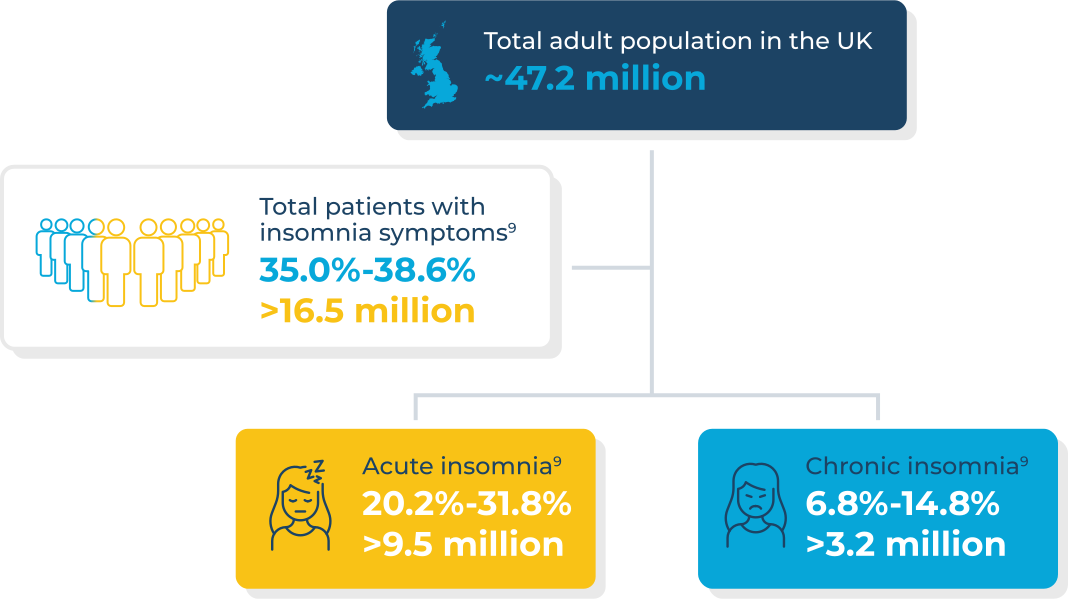
Insomnia is the most common manifestation of sleep disorders5

Despite its high prevalence, insomnia remains under-recognised and under-treated:6

Chronic insomnia (insomnia disorder) is now classified separately from other sleep-wake disorders

In 2019, the British Association of Psychopharmacology (BAP) consensus statement recognised the distinct shift away from the terminology of ‘primary’ and ‘secondary’ insomnia, with chronic insomnia to be considered as a separate disorder.7
The American Psychiatric Association (APA) Diagnostic and Statistical Manual of Mental Disorders (fifth edition; DSM-5) first highlighted the removal of the primary/ secondary insomnia terminology, replacing the term ‘primary insomnia’ (ie chronic insomnia) with ‘insomnia disorder’.8

Insomnia diagnosis: acute versus chronic

Acute insomnia

Short-term or acute insomnia (also termed ‘other specified insomnia disorder’) is defined in the DSM-5 as:10

Chronic insomnia

Long-term or chronic insomnia (also termed ‘insomnia disorder’) is defined in the DSM-5 as:10
When diagnosing chronic insomnia, it is important to exclude other sleep‑related disorders.

Chronic insomnia - current patient journey

The typical journey that a patient with chronic insomnia will experience may consist of seven distinct phases, although this varies between countries and between individuals and is not always linear.6 Some patients may also be referred to specialist care.6
Onset of sleep problems

Positive behaviours6
Negative behaviours
According to personal research, pharmacist or peer recommendations6
May not provide lasting relief and is often associated with anticholinergic side effects6,7
After evaluation of needs, HCPs may:6
HCP considers benefit/ risk to patient6
Pharmacological treatment can be a compromise between sleep benefit and:6

QUVIVIQ™ is licensed for chronic insomnia in the UK and recommended by NICE in adults with symptoms lasting for 3 nights or more per week for at least 3 months.1,16*

Treatment duration should be as short as possible and should be assessed within 3 months.1
Many patients develop coping mechanisms and individual behaviour patterns, alongside or without medication.
*Only if cognitive behavioural therapy for insomnia (CBTi) has been tried but not worked, or CBTi is not available or is unsuitable.16

Treatment options

For the treatment of chronic insomnia, the BAP consensus statement and the ESRS/EIN guidelines recommend:7,11

first-line treatment with cognitive behavioural therapy for insomnia (CBTi)

for patients with severe symptoms or an acute exacerbation of chronic insomnia, short course (<1 week) of a hypnotic drug in addition to CBTi.

If CBTi is unavailable or fails, or the patient cannot engage with CBTi, evidence-based pharmacological treatment should be offered.

Cognitive behavioural therapy for insomnia

CBTi is an evidence-based alternative to drug therapy and is the recommended first‑line treatment for chronic insomnia, available face-to-face or digitally.7,11
CBTi apps may be available via the NHS in some areas of the UK for patients with insomnia12,13

Benefits of CBTi

Regarded as the first and most effective approach for treating insomnia11
It can be delivered face‑to‑face by a clinician or therapist, or digitally11
Multicomponent therapy comprising sleep hygiene, relaxation and other cognitive strategies11

Limitations of CBTi

May not be available via healthcare services in the patient’s area11
Long wait times for access to face‑to‑face CBTi14
May be ineffective, or the patient unsuitable or non‑compliant11,14

If CBTi is not effective or unavailable, or if the patient is unsuitable or non‑compliant, drug treatment can be considered11

Possible limitations which may be seen when using current medications for chronic insomnia

Current insomnia medications include benzodiazepines/ benzodiazepine receptor agonists, Z-drugs, antidepressants (off-licence use) and melatonin (for use in patients aged 55 years or older only).7,11

Why choose QUVIVIQ™ for your adult patients with chronic insomnia?1,11

QUVIVIQ™ is indicated for the treatment of adult patients with insomnia characterised by symptoms present for at least 3 months and considerable impact on daytime functioning.1
A different mode of action vs other hypnotics7,18
Night-time efficacy2
Daytime efficacy2
No evidence of abuse or withdrawal symptoms2
Generally mild‑to‑moderate AEs1
Nightly dosing1

In clinical trials.

AE: adverse event

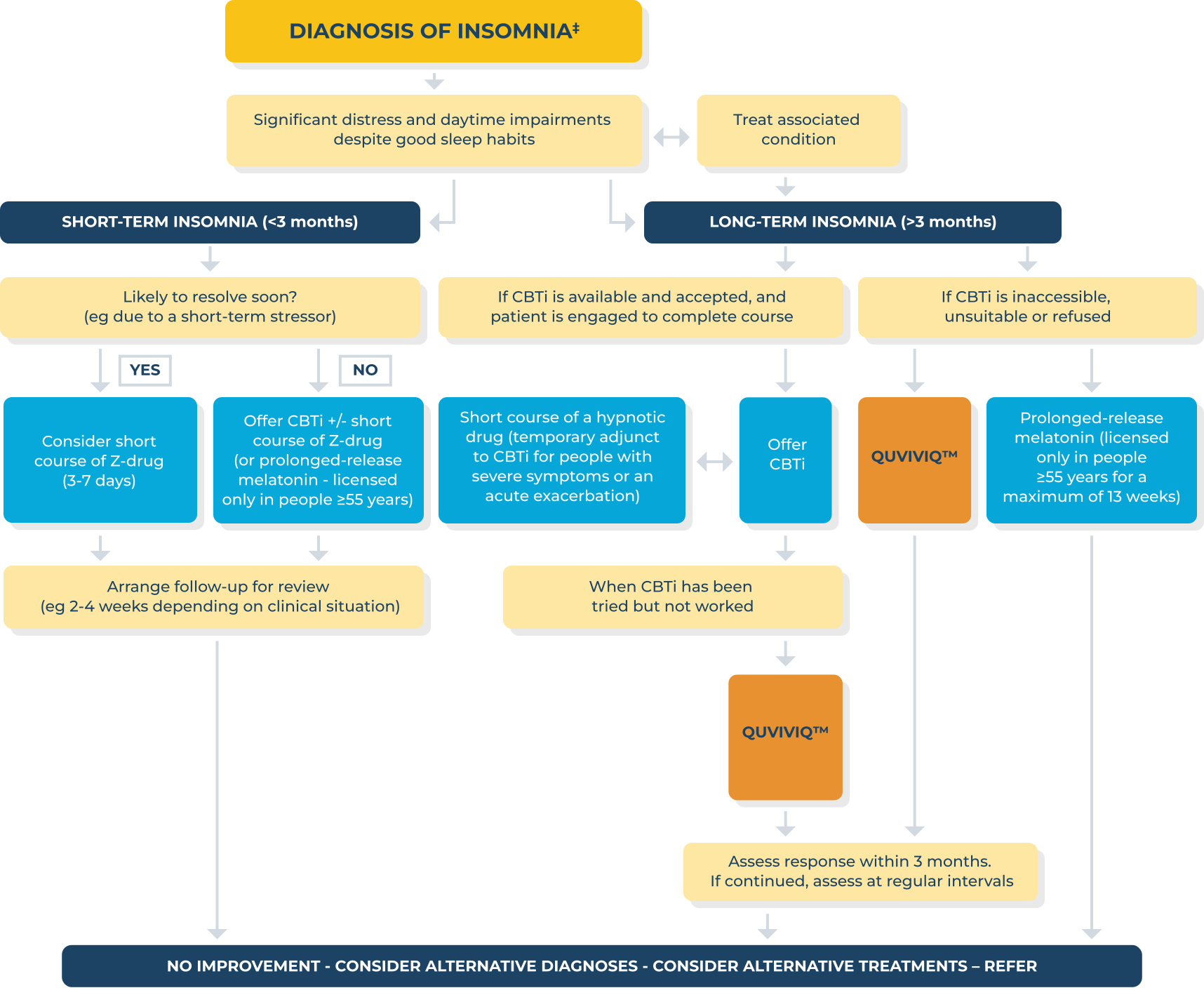
Proposed treatment algorithm for chronic insomnia following availability of QUVIVIQ™
This algorithm is based on the NICE scenarios for managing short-term and long-term insomnia.19,20

Consider the need for referral to a sleep clinic or neurology if symptoms of another sleep disorder are present. Address any circumstances/ stressors associated with onset of insomnia. Ensure comorbidities (eg anxiety or depression) are optimally managed. Offer advice on sleep hygiene. Advise the person not to drive if they feel sleepy.

QUVIVIQ™ is a dual orexin receptor antagonist (DORA) that works differently to other hypnotics.
QUVIVIQ™ reduces overactive wake signalling by blocking orexin, allowing restorative sleep to occur without altering the proportion of sleep stages.1-4,18,21,22

ICD-11: International Classification of Diseases, 11th revision; OTC: over the counter

This medicine is subject to additional monitoring.

Adverse events should be reported. Reporting forms and information can be found at https://yellowcard.mhra.gov.uk/. Adverse events should also be reported to Idorsia at ds.safety.uk@idorsia.com.

This information is intended for UK healthcare professionals.

References

  1. QUVIVIQ™ (daridorexant) Summary of Product Characteristics
  2. Mignot E, Mayleben D et al. Safety and efficacy of daridorexant in patients with insomnia disorder: results from two multicentre, randomised, double-blind, placebo-controlled, phase 3 trials. Lancet Neurol 2022;21:125-139
  3. Robbins R, Quan S F et al. A nationally representative survey assessing restorative sleep in US adults. Front Sleep 2022;1:935228
  4. Kunz D, Dauvilliers Y et al. Long-term safety and tolerability of daridorexant in patients with insomnia disorder. CNS Drugs 2023;37:93-106
  5. American Psychiatric Association. What are sleep disorders? Available at: psychiatry.org. Accessed July 2025
  6. O’Regan D, Garcia-Borreguero D et al. Mapping the insomnia patient journey in Europe and Canada. Front Public Health 2023;11:1233201
  7. Wilson S, Anderson K et al. British Association for Psychopharmacology consensus statement on evidence-based treatment of insomnia, parasomnias and circadian rhythm disorders: An update. J Psychopharmacol 2019;33:923-947
  8. American Psychiatric Association. Sleep-wake disorders. Available at: psychiatry.org. Accessed July 2025
  9. Hafner M, Romanelli R J et al. The societal and economic burden of insomnia in adults: an international study. RAND Corporation, Santa Monica, CA, US, 2023. Available at: rand.org. Accessed July 2025
  10. American Psychiatric Association. Diagnostic and Statistical Manual of Mental Disorders, Fifth Edition, Text Revision. Arlington, VA, American Psychiatric Publishing, 2022. Accessed July 2025
  11. Riemann D, Espie C A et al. The European Insomnia Guideline: an update on the diagnosis and treatment of insomnia 2023. J Sleep Res 2023;32:e14035
  12. Sleepio. Available at: bighealth.co.uk. Accessed July 2025
  13. Sleepstation. Available at: sleepstation.org.uk. Accessed July 2025
  14. Simon L, Reimann J et al. Help for insomnia from the app store? A standardized rating of mobile health applications claiming to target insomnia. J Sleep Res 2023;32:e13642
  15. Watson N F, Benca R M et al. Alliance for sleep clinical practice guideline on switching or deprescribing hypnotic medications for insomnia. J Clin Med 2023;12:2493
  16. National Institute for Health and Care Excellence (NICE). Technology appraisal guidance 922. Daridorexant for treating long-term insomnia, 18 October 2023. Available at: nice.org.uk. Accessed July 2025
  17. National Institute for Health and Care Excellence (NICE). NICE guideline 215. Medicines associated with dependence or withdrawal symptoms: safe prescribing and withdrawal management for adults, 20 April 2022. Available at: nice.org.uk. Accessed July 2025
  18. Roch C, Bergamini G et al. Nonclinical pharmacology of daridorexant: a new dual orexin receptor antagonist for the treatment of insomnia. Psychopharmacology (Berl) 2021;238:2693-2708
  19. National Institute for Health and Care Excellence (NICE). Clinical knowledge summary: insomnia. Managing long-term insomnia, last updated June 2024. Available at: cks.nice.org.uk. Accessed July 2025
  20. National Institute for Health and Care Excellence (NICE). Clinical knowledge summary: insomnia. Managing short-term insomnia, last updated June 2024. Available at: cks.nice.org.uk. Accessed July 2025
  21. Di Marco T, Djonlagic I et al. Effect of daridorexant on sleep architecture in patients with chronic insomnia disorder: a pooled post hoc analysis of two randomized Phase 3 clinical studies. Sleep 2024:zsae098
  22. Chaput J P, Dutil C, Sampasa-Kanyinga H. Sleeping hours: what is the ideal number and how does age impact this? Nat Sci Sleep 2018;10:421-430

© NICE 2023. Daridorexant for treating long-term insomnia. Available from www.nice.org.uk/guidance/TA922. All rights reserved. Subject to Notice of rights.

© NICE 2022 Medicines associated with dependence or withdrawal symptoms: safe prescribing and withdrawal management for adults. Available from www.nice.org.uk/guidance/ng215. All rights reserved. Subject to Notice of rights.

NICE guidance is prepared for the National Health Service in England. All NICE guidance is subject to regular review and may be updated or withdrawn. NICE accepts no responsibility for the use of its content in this product/ publication.

UK-DA-00915 | Last updated: July 2025

Copyright © 2026 Idorsia Pharmaceuticals Ltd

Welcome to the Idorsia UK
Healthcare Professional portal

This information is intended for UK Healthcare Professionals only.

By entering this site you are confirming that you are a UK Healthcare Professional.

UK-DA-00217 | Date of preparation: October 2023

Copyright © 2023 Idorsia Pharmaceuticals Ltd

Welcome back!

Please complete the form below to sign in.

You don’t have an account? 

You are now leaving pro.idorsia.uk

You will now be redirected to an independent third party site that is maintained outside of this website, where all Idorsia Pharmaceuticals Ltd UK’s medicines can be found: the electronic Medicines Compendium (eMC)

UK-DA-00439 | Date of preparation: May 2024

Copyright ©2026 Idorsia Pharmaceuticals Ltd

Gain access to resources on chronic insomnia

Fill in the form below to get instant access to this resource and unlock our full library of downloadable materials.

You are now leaving pro.idorsia.uk

You are now leaving pro.idorsia.uk. You will now be redirected to an independent third-party site that is maintained outside of this website.
You are now leaving pro.idorsia.uk. The linked website provides helpful information if you are having trouble sleeping. It is neither owned or controlled by Idorsia Pharmaceuticals Ltd. Idorsia accepts no responsibility for the content or services of the linked site.

UK-DA-00445 | Date of preparation: May 2024

Copyright ©2026 Idorsia Pharmaceuticals Ltd

Confirming your contact information and preferences means that you agree that we, Idorsia, manage your personal data in our Client Relationship Management system to document, customise, plan, and conduct our interactions with you and, to analyse and segment your interactions, interests, preferences, and scientific activities in order to interact with you in a way we think is most relevant to you.

It also means that you agree that we will send you Idorsia standard or personalised medical, company or product related information and material via email based on your choices and on what we think is of interest to you. You further consent that we process your personal data for this.

For more information about us, our processing of your personal data and your rights, please see our Privacy Notice.

Create an account
Access our in-depth e-learning resources on chronic insomnia
Title *
First name *
Last name *
Professional email *
Password *
Specialty *
Professional registration number *

You already have an account? 

Gain access to resources on chronic insomnia​

Register to get access to: