

Clinical data on QUVIVIQ™ efficacy
Home - Discover QUVIVIQ™ - QUVIVIQ™ efficacy
The QUVIVIQ™ clinical trial programme: day and night outcomes for adults with chronic insomnia
Help give your patients better restorative sleep and better daytime functioning vs placebo1-4
QUVIVIQ™ clinical studies2
Study designs
*Including over-the-counter medication and herbal medicines.2
†A 25 mg dose is recommended for patients with moderate hepatic impairment or those using moderate CYP3A4 inhibitors (eg erythromycin, ciprofloxacin, cyclosporine).1
‡A 10 mg dose is not licensed for use, and therefore not presented.1
CYP3A4: cytochrome P450 3A4; DSM-5: Diagnostic and Statistical Manual of Mental Disorders, 5th edn
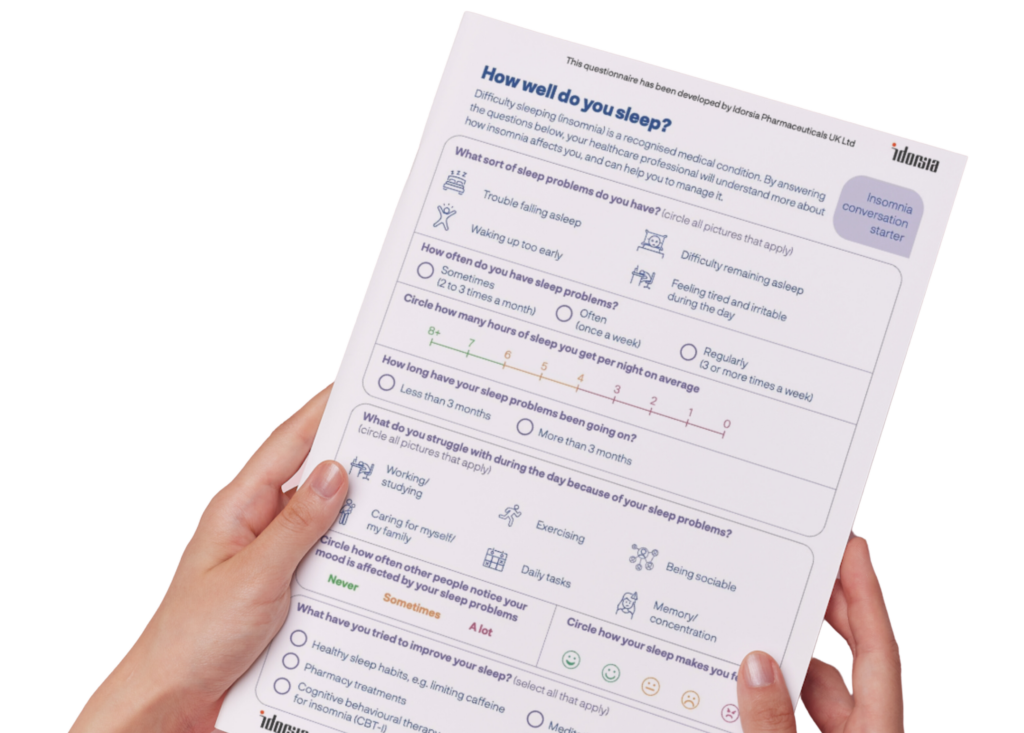
The Insomnia Daytime Symptoms and Impacts Questionnaire (IDSIQ)
The Insomnia Daytime Symptoms and Impacts Questionnaire
IDSIQ is a patient-reported outcome (PRO) measure of daytime functioning, validated according to FDA guidelines, which is currently limited to use in clinical trials only.2,5
Summary of QUVIVIQ™ efficacy
From baseline versus placebo, QUVIVIQ™:
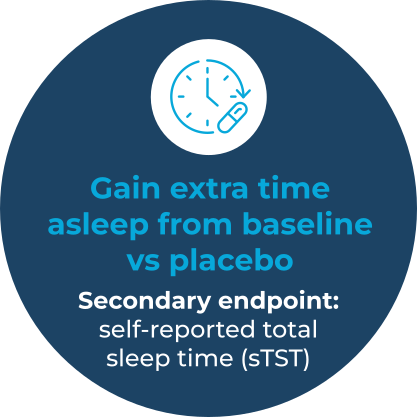
Increases total sleep time

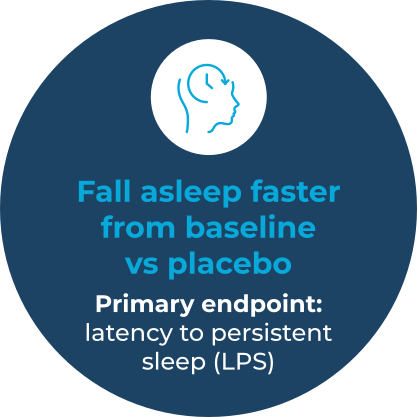
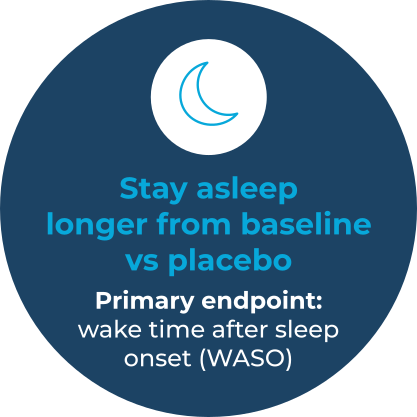
Fall asleep faster and stay asleep longer with continuous improvements in sleep outcomes from baseline vs placebo (primary outcome)2§
Works throughout the night

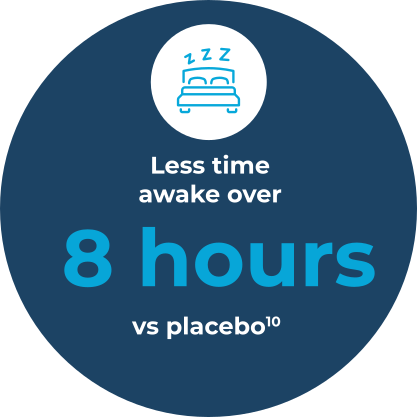
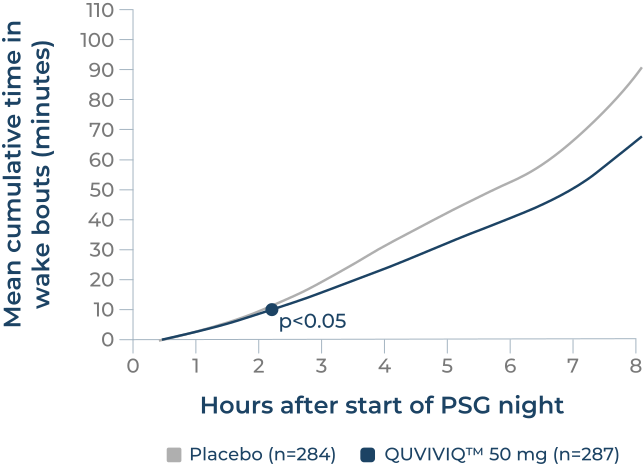
Reduce overactive wake signalling from baseline vs placebo throughout the night2,8-10
Improves daytime functioning

Improve daytime functioning with continuous improvements from baseline vs placebo (secondary outcome)2‖
Works over the long term

Night and daytime efficacy is maintained with up to 12 months of nightly use2,4
§Primary sleep outcomes include latency to persistent sleep (LPS) and wake time after sleep onset (WASO).2
ǁBased on IDSIQ sleepiness domain scores. IDSIQ is a patient-reported measure of daytime functioning.
Change in IDSIQ sleepiness domain score at Months 1 and 3 was a secondary endpoint. A decrease of 4 points for the sleepiness domain score is considered clinically meaningful change.2,6 IDSIQ© 2020, University of Pittsburgh. All rights reserved. IDSIQ©-14 derivative created 2020 by Idorsia Pharmaceuticals Ltd under licence and distributed by Idorsia Pharmaceuticals Ltd under licence.6
QUVIVIQ™ clinical efficacy data
Primary endpoint: latency to persistent sleep (LPS)
QUVIVIQ™ improves time to sleep onset versus placebo1,2
Study 1: Objective change from baseline in LPS to Months 1 and 3 for QUVIVIQ™ versus placebo
Adapted from Mignot E et al, 20222
LPS values are the mean of the polysomnography recordings recorded over two consecutive nights during the 3-month double-blind treatment period.2
All values have been presented as LSM (95% CI), as per the QUVIVIQ™ SPC.1
QUVIVIQ™ improves time to sleep onset versus placebo1,2
Study 2: Objective change from baseline in LPS to Months 1 and 3 for QUVIVIQ™ versus placebo
Adapted from Mignot E et al, 20222
LPS values are the mean of the polysomnography recordings recorded over two consecutive nights during the 3-month double-blind treatment period.2
All values have been presented as LSM (95% CI), as per the QUVIVIQ™ SPC.1
Primary endpoint: wake time after sleep onset (WASO)
Adapted from Mignot E et al, 20222
QUVIVIQ™ improves sleep maintenance versus placebo1,2
Adapted from Mignot E et al, 20222
WASO values are the mean of the polysomnography recordings recorded over two consecutive nights during the 3-month double-blind treatment period.2
All values have been presented as LSM (95% CI), as per the QUVIVIQ™ SPC.1
Secondary endpoint: self-reported total sleep time (sTST)
QUVIVIQ™ increases total sleep time versus placebo1,2
Adapted from Mignot E et al, 20222
Adapted from Mignot E et al, 20222
All values have been presented as LSM (95% CI), as per the QUVIVIQ™ SPC.1
Secondary endpoint: IDSIQ sleepiness domain score
Study 1: Change from baseline in daytime sleepiness to Months 1 and 3 for QUVIVIQ™ versus placebo
Adapted from Mignot E et al, 20222
Study 2: Change from baseline in daytime sleepiness to Months 1 and 3 for QUVIVIQ™ versus placebo
Adapted from Mignot E et al, 20222
All values have been presented as LSM (95% CI), as per the QUVIVIQ™ SPC.1
Prespecified efficacy endpoint: IDSIQ total score
Difference for QUVIVIQ™ versus placebo of mean observed value of IDSIQ total scores at Months 1 and 3
| Study 1 | Study 2 | ||||
| QUVIVIQ™ 50 mg (n=310) | QUVIVIQ™ 25 mg (n=310) | Placebo (n=310) | QUVIVIQ™ 25 mg (n=309) | Placebo (n=305) | |
| Baseline IDSIQ total score | 74.5 ±25.2 | 73.1 ±24.6 | 73.6 ±24.6 | 73.1 ±21.2 | 74.5 ±20.3 |
|
Month 1 LSM difference to placebo (95% CI) |
-7.2 (-9.8 to -4.7) | -2.9 (-5.5 to -0.4) | -3.1 (-5.8 to -0.4) | ||
| p value vs placebo | p<0.0001 | p=0.0241 | p=0.0239 | ||
|
Month 3 LSM difference to placebo (95% CI) |
-7.2 (-10.5 to -3.9) | -3.5 (-6.8 to -0.1) | -4.2 (-7.5 to -1.0) | ||
| p value vs placebo | p<0.0001 | p=0.0428 | p=0.0107 | ||
p values vs placebo have not been adjusted for multiplicity.
IDSIQ scores based on the mean of daily diary entries in the seven days before polysomnography nights.2
Exploratory endpoint: self-reported total sleep time (sTST) with up to 12 months of continuous treatment
QUVIVIQ™ works over the long term versus placebo4
Mean change from baseline to 12 months in sTST for QUVIVIQ™ versus placebo
Exploratory endpoint: IDSIQ total score with up to 12 months of continuous treatment
All p values are for QUVIVIQ™ versus placebo unless otherwise stated.
CI: confidence interval; FDA: US Food and Drug Administration; IDSIQ: insomnia daytime symptoms and impacts questionnaire; LSM: least squares mean; NS: non-significant; PSG: polysomnography; RO: run-out; SPC: summary of product characteristics
QUVIVIQ™ safety profile summary
The most frequently reported adverse reactions observed with QUVIVIQ™ treatment were headache and somnolence.1
The majority of adverse reactions were mild to moderate in intensity. No evidence of a dose‑response relationship for the frequency or severity of adverse reactions was observed. The adverse reaction profile in elderly subjects was consistent with that observed in younger subjects.1
 This medicine is subject to additional monitoring.
Adverse events should be reported. Reporting forms and information can be found at https://yellowcard.mhra.gov.uk/. Adverse events should also be reported to Idorsia at ds.safety.uk@idorsia.com.
This information is intended for UK healthcare professionals.
References
- QUVIVIQ™ (daridorexant) Summary of Product Characteristics
- Mignot E, Mayleben D et al. Safety and efficacy of daridorexant in patients with insomnia disorder: results from two multicentre, randomised, double-blind, placebo-controlled, phase 3 trials. Lancet Neurol 2022;21:125-139a
- Robbins R, Quan S F et al. A nationally representative survey assessing restorative sleep in US adults. Front Sleep 2022;1:935228
- Kunz D, Dauvilliers Y et al. Long-term safety and tolerability of daridorexant in patients with insomnia disorder. CNS Drugs 2023;37:93-106
- Hudgens S, Phillips-Beyer A et al. Development and validation of the insomnia daytime symptoms and impacts questionnaire (IDSIQ). Patient 2021;14:249-268
- Phillips-Beyer A, Kawata A K et al. Meaningful within-patient change on the insomnia daytime symptoms and impacts questionnaire (IDSIQ): analysis of phase III clinical trial data of daridorexant. Pharmaceut Med 2023;37:291-303
- Hudgens S, Phillips-Beyer A et al. Summary of research: development and validation of the insomnia daytime symptoms and impacts questionnaire (IDSIQ). Adv Ther 2023;40:2573-2576
- Roch C, Bergamini G et al. Nonclinical pharmacology of daridorexant: a new dual orexin receptor antagonist for the treatment of insomnia. Psychopharmacology (Berl) 2021;238:2693-2708
- Di Marco T, Djonlagic I et al. Effect of daridorexant on sleep architecture in patients with chronic insomnia disorder: a pooled post hoc analysis of two randomized Phase 3 clinical studies. Sleep 2024:zsae098
- Di Marco T, Scammell T E et al. Number, duration, and distribution of wake bouts in patients with insomnia disorder: effect of daridorexant and zolpidem. CNS Drugs 2023;37:639-653
© NICE 2023. Daridorexant for treating long-term insomnia. Available from www.nice.org.uk/guidance/TA922. All rights reserved. Subject to Notice of rights.
NICE guidance is prepared for the National Health Service in England. All NICE guidance is subject to regular review and may be updated or withdrawn. NICE accepts no responsibility for the use of its content in this product/ publication.
UK-DA-00918 | Last updated: July 2025
QUV-Pro.idorsia QUVIVIQ Efficacy_June 2025