

Prescribing information and adverse event reporting information can be accessed using the PI & AE button at the side.
QUVIVIQ™ is indicated for the treatment of adult patients with insomnia characterised by symptoms present for at least 3 months and considerable impact on daytime functioning.1
Impact of chronic insomnia
Home - Discover QUVIVIQ™ - Impact of chronic insomnia
Impact of chronic insomnia
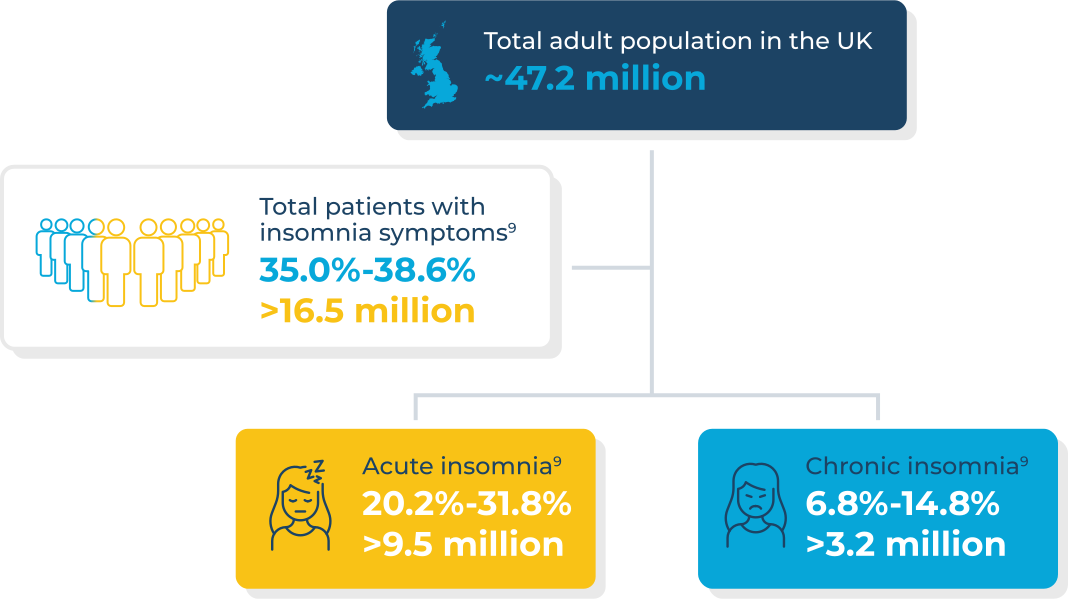
Insomnia is the most common manifestation of sleep disorders5
Despite its high prevalence, insomnia remains under-recognised and under-treated:6
- It carries a heavy burden for both patients and the healthcare system6
- It is often unrecognised and/or untreated due to barriers in insomnia assessment and management6
Chronic insomnia (insomnia disorder) is now classified separately from other sleep-wake disorders
- ‘Insomnia disorder should be diagnosed whenever insomnia diagnostic criteria are met, irrespective of any concurrent physical or mental disorder, and, importantly, also irrespective of any other concurrent sleep disorder’
Insomnia diagnosis: acute versus chronic
Acute insomnia
- difficulty initiating or maintaining sleep resulting in sleep dissatisfaction and some form of daytime impairment
- less than 3 months duration
- the sleep difficulty occurs despite adequate opportunity for sleep
Chronic insomnia
- difficulty falling or staying asleep, early awakening or non‑restorative sleep
- results in clinically significant distress or impaired daytime functioning or wellbeing
- experienced for at least 3 nights per week for at least 3 months
- the sleep difficulty occurs despite adequate opportunity for sleep
Chronic insomnia - current patient journey
Onset of sleep problems

- Insomnia trigged by specific stressor and sleep behaviour does not recover6
- Lifelong sleep issues that may worsen for periods6
Self-motivated behavioural adaptations

- Sleep hygiene
- Altering diet/ caffeine intake
- Active relaxation
- Exercise
- Alcohol or drug abuse6
- Daytime napping11
- Overcompensatory bedtimes or rise times11
OTC medication
First consultation
- Often driven by reaching 'crisis point' with significant daytime impairment6
- The patient may feel desperate and may expect a prescription for medication6
Behavioural/ cognitive therapy under HCP guidance

- offer sleep hygiene education
- refer to cognitive therapy
Initiation of prescription medication

- A patient's feelings may fluctuate between relief/ hopefulness and failure for succumbing to prescription treatment
- Medication use should be minimised with the aim to restore natural, good-quality sleep
Referral
- Management is usually handled in primary care6
- Referral may be required for further investigations or for management of associated conditions including mental health issues6
Long-term insomnia management

- risk/ fear of dependency or tolerance
- residual daytime effects
- stigma/ feelings of failure
QUVIVIQ™ is licensed for chronic insomnia in the UK and recommended by NICE in adults with symptoms lasting for 3 nights or more per week for at least 3 months.1,16*
Treatment options
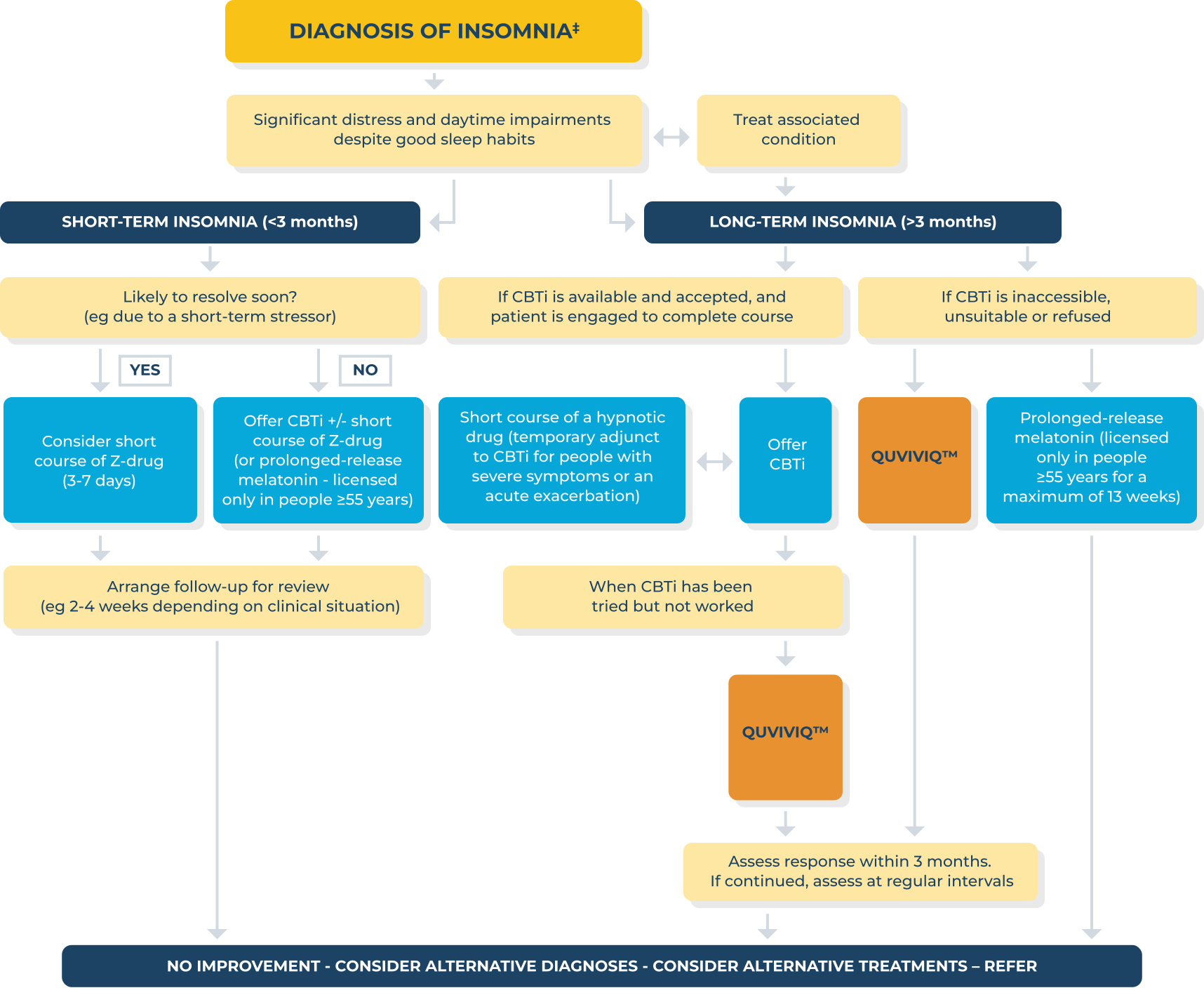
first-line treatment with cognitive behavioural therapy for insomnia (CBTi)
for patients with severe symptoms or an acute exacerbation of chronic insomnia, short course (<1 week) of a hypnotic drug in addition to CBTi.
Cognitive behavioural therapy for insomnia
Benefits of CBTi
Limitations of CBTi
If CBTi is not effective or unavailable, or if the patient is unsuitable or non‑compliant, drug treatment can be considered11
Possible limitations which may be seen when using current medications for chronic insomnia
Current insomnia medications include benzodiazepines/ benzodiazepine receptor agonists, Z-drugs, antidepressants (off-licence use) and melatonin (for use in patients aged 55 years or older only).7,11
- Limited choice: some treatments (eg benzodiazapines) for insomnia are no longer recommended or used7,11,15
- Medications are licensed and intended for acute/ short-term treatment only7,11,16
- May not maintain sleep during the night (eg Z-drugs)7
- Side effects/ withdrawal: tolerance resulting in reduced effectiveness over time, potential for dependency and daytime drowsiness7,11,17
Why choose QUVIVIQ™ for your adult patients with chronic insomnia?1,11
†In clinical trials.
AE: adverse event
‡Consider the need for referral to a sleep clinic or neurology if symptoms of another sleep disorder are present. Address any circumstances/ stressors associated with onset of insomnia. Ensure comorbidities (eg anxiety or depression) are optimally managed. Offer advice on sleep hygiene. Advise the person not to drive if they feel sleepy.
QUVIVIQ™ is a dual orexin receptor antagonist (DORA) that works differently to other hypnotics.
QUVIVIQ™ reduces overactive wake signalling by blocking orexin, allowing restorative sleep to occur without altering the proportion of sleep stages.1-4,18,21,22
This medicine is subject to additional monitoring.
Adverse events should be reported. Reporting forms and information can be found at https://yellowcard.mhra.gov.uk/. Adverse events should also be reported to Idorsia at ds.safety.uk@idorsia.com.
This information is intended for UK healthcare professionals.
References
- QUVIVIQ™ (daridorexant) Summary of Product Characteristics
- Mignot E, Mayleben D et al. Safety and efficacy of daridorexant in patients with insomnia disorder: results from two multicentre, randomised, double-blind, placebo-controlled, phase 3 trials. Lancet Neurol 2022;21:125-139
- Robbins R, Quan S F et al. A nationally representative survey assessing restorative sleep in US adults. Front Sleep 2022;1:935228
- Kunz D, Dauvilliers Y et al. Long-term safety and tolerability of daridorexant in patients with insomnia disorder. CNS Drugs 2023;37:93-106
- American Psychiatric Association. What are sleep disorders? Available at: psychiatry.org. Accessed July 2025
- O’Regan D, Garcia-Borreguero D et al. Mapping the insomnia patient journey in Europe and Canada. Front Public Health 2023;11:1233201
- Wilson S, Anderson K et al. British Association for Psychopharmacology consensus statement on evidence-based treatment of insomnia, parasomnias and circadian rhythm disorders: An update. J Psychopharmacol 2019;33:923-947
- American Psychiatric Association. Sleep-wake disorders. Available at: psychiatry.org. Accessed July 2025
- Hafner M, Romanelli R J et al. The societal and economic burden of insomnia in adults: an international study. RAND Corporation, Santa Monica, CA, US, 2023. Available at: rand.org. Accessed July 2025
- American Psychiatric Association. Diagnostic and Statistical Manual of Mental Disorders, Fifth Edition, Text Revision. Arlington, VA, American Psychiatric Publishing, 2022. Accessed July 2025
- Riemann D, Espie C A et al. The European Insomnia Guideline: an update on the diagnosis and treatment of insomnia 2023. J Sleep Res 2023;32:e14035
- Sleepio. Available at: bighealth.co.uk. Accessed July 2025
- Sleepstation. Available at: sleepstation.org.uk. Accessed July 2025
- Simon L, Reimann J et al. Help for insomnia from the app store? A standardized rating of mobile health applications claiming to target insomnia. J Sleep Res 2023;32:e13642
- Watson N F, Benca R M et al. Alliance for sleep clinical practice guideline on switching or deprescribing hypnotic medications for insomnia. J Clin Med 2023;12:2493
- National Institute for Health and Care Excellence (NICE). Technology appraisal guidance 922. Daridorexant for treating long-term insomnia, 18 October 2023. Available at: nice.org.uk. Accessed July 2025
- National Institute for Health and Care Excellence (NICE). NICE guideline 215. Medicines associated with dependence or withdrawal symptoms: safe prescribing and withdrawal management for adults, 20 April 2022. Available at: nice.org.uk. Accessed July 2025
- Roch C, Bergamini G et al. Nonclinical pharmacology of daridorexant: a new dual orexin receptor antagonist for the treatment of insomnia. Psychopharmacology (Berl) 2021;238:2693-2708
- National Institute for Health and Care Excellence (NICE). Clinical knowledge summary: insomnia. Managing long-term insomnia, last updated June 2024. Available at: cks.nice.org.uk. Accessed July 2025
- National Institute for Health and Care Excellence (NICE). Clinical knowledge summary: insomnia. Managing short-term insomnia, last updated June 2024. Available at: cks.nice.org.uk. Accessed July 2025
- Di Marco T, Djonlagic I et al. Effect of daridorexant on sleep architecture in patients with chronic insomnia disorder: a pooled post hoc analysis of two randomized Phase 3 clinical studies. Sleep 2024:zsae098
- Chaput J P, Dutil C, Sampasa-Kanyinga H. Sleeping hours: what is the ideal number and how does age impact this? Nat Sci Sleep 2018;10:421-430
© NICE 2023. Daridorexant for treating long-term insomnia. Available from www.nice.org.uk/guidance/TA922. All rights reserved. Subject to Notice of rights.
© NICE 2022 Medicines associated with dependence or withdrawal symptoms: safe prescribing and withdrawal management for adults. Available from www.nice.org.uk/guidance/ng215. All rights reserved. Subject to Notice of rights.
NICE guidance is prepared for the National Health Service in England. All NICE guidance is subject to regular review and may be updated or withdrawn. NICE accepts no responsibility for the use of its content in this product/ publication.
UK-DA-00915 | Last updated: July 2025